What Is the Protein and Calories Content of 10 Chicken Wings?
Chicken wings are one of the most popular fast-food items worldwide, known for their crispy texture, juicy meat, and bold flavor. Whether served at restaurants, parties, or as a quick takeaway meal, they remain a favorite for many people. However, when it comes to nutrition, a common concern is understanding exactly how much protein and how many calories are in 10 chicken wings. The answer can vary depending on cooking method, portion size, and added sauces, but having a clear breakdown helps in making informed dietary decisions and improving overall meal planning.
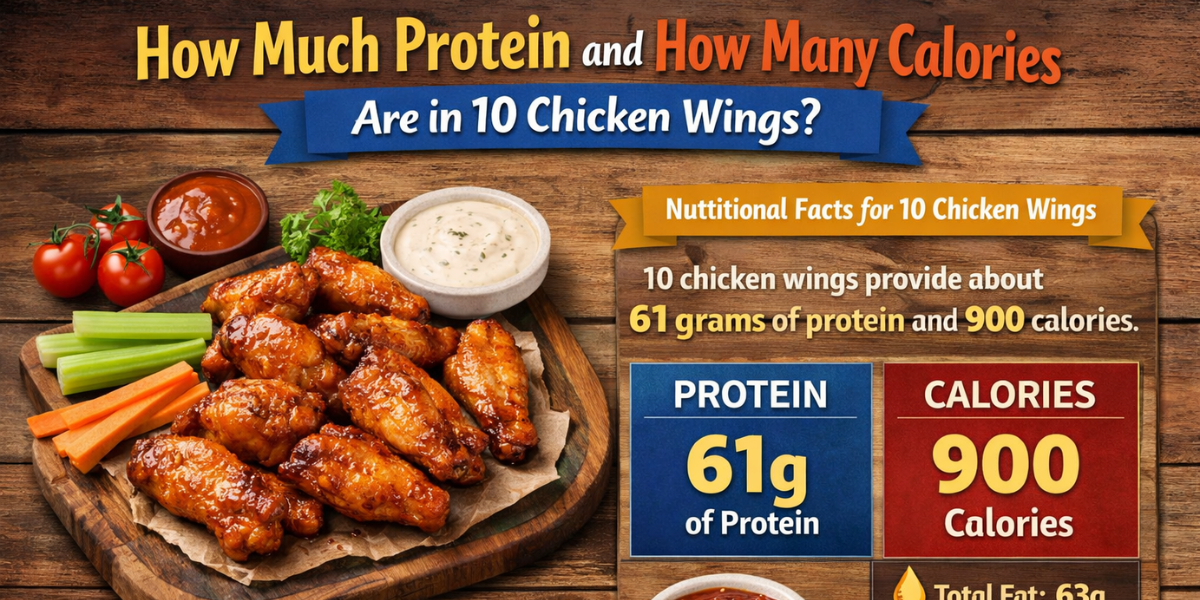
On average, 10 chicken wings contain between 700 and 1,200 calories. This variation is mainly due to how the wings are prepared. Fried chicken wings are the highest in calories because they absorb oil during cooking, often reaching 100 to 120 calories per wing. This means a portion of 10 fried wings can easily exceed 1,000 calories. In comparison, baked wings are slightly lower in calories, averaging around 70 to 90 calories per wing, bringing the total to approximately 700 to 900 calories. Grilled chicken wings are typically the lowest in calories, ranging from 60 to 80 calories per wing, making them a better option for individuals focused on weight management or calorie control.
Protein is one of the main nutritional benefits of chicken wings. A single wing generally provides around 6 to 9 grams of protein, depending on its size and meat content. Consuming 10 chicken wings can therefore deliver approximately 60 to 90 grams of protein, which is a significant amount for supporting muscle growth, recovery, and overall body function. Protein also helps keep you full for longer periods, making chicken wings a satisfying meal option when consumed in moderation.
Despite their high protein content, chicken wings also contain a considerable amount of fat. Most of this fat comes from the skin and the cooking method, especially when deep frying is involved. Each wing can contain around 6 to 10 grams of fat, meaning that 10 wings may provide between 60 and 100 grams of fat. This high fat content contributes heavily to the overall calorie count and is an important factor to consider for those monitoring their dietary fat intake. Choosing grilled or baked wings and removing the skin can significantly reduce fat levels.

Another major factor affecting calorie content is the type of sauce used. Chicken wings are rarely eaten plain, and sauces such as barbecue, buffalo, honey garlic, or creamy dressings can substantially increase total calories. For example, adding sweet or heavy sauces can contribute an additional 150 to 300 calories per serving of 10 wings, while creamy dips like ranch or blue cheese can push the total even higher. As a result, a full serving with sauces can easily exceed 1,200 to 1,500 calories. For better calorie control, lighter sauces or dry seasoning options are recommended.

In addition to protein, chicken wings provide several essential nutrients. They contain vitamins such as B6 and B12, which support energy production and brain health. They also supply important minerals like zinc, iron, and phosphorus, which contribute to immune function and bone strength. However, these nutritional benefits can be outweighed if wings are consumed excessively or prepared using unhealthy methods.
Chicken wings can still be part of a balanced diet when eaten in moderation and prepared wisely. Choosing healthier cooking methods like grilling or baking instead of frying can significantly reduce calorie intake. Pairing wings with nutrient-rich sides such as vegetables or salads instead of fries can also create a more balanced meal. Additionally, controlling portion sizes and limiting heavy sauces can make a noticeable difference in overall nutrition.
When compared to other protein sources, chicken wings offer a high amount of protein but also come with more fat and calories. For example, grilled chicken breast provides similar protein levels with fewer calories and significantly less fat. This makes chicken wings more suitable as an occasional indulgence rather than a daily protein source for individuals on strict diets. However, for those on high-calorie diets or looking to gain weight, chicken wings can be a convenient and enjoyable option.
Portion control is another important consideration. While 10 chicken wings may seem like a standard serving, it can be quite calorie-dense. Reducing the portion to 5 or 6 wings and combining them with healthier foods can help maintain a balanced diet without sacrificing taste. This approach allows you to enjoy chicken wings while keeping your calorie intake in check.
In today’s health-conscious environment, many restaurants and food brands are offering healthier alternatives such as air-fried wings, low-calorie sauces, and even plant-based options. These alternatives cater to consumers who want to enjoy the flavor of chicken wings while reducing calorie and fat intake. As dietary trends continue to evolve, more innovative and healthier options are expected to become widely available.
In conclusion, 10 chicken wings typically contain between 700 and 1,200 calories and provide around 60 to 90 grams of protein. While they are a rich source of protein and can be very satisfying, they are also high in fat and calories, especially when fried or paired with heavy sauces. By choosing healthier cooking methods, managing portion sizes, and being mindful of toppings, chicken wings can be enjoyed as part of a balanced diet. Understanding their nutritional value allows you to make smarter food choices while still enjoying one of the most popular comfort foods.