How to Make Thai Tea at Home: A Complete Step-by-Step Guide
Thai tea is a rich, creamy, and beautifully colored beverage that has become popular all over the world. Known for its bold orange color and strong, sweet flavor, Thai tea is most commonly served over ice with milk and sugar. Its refreshing yet indulgent taste makes it a favorite in Thai restaurants and cafés.
Many people assume that Thai tea is difficult to prepare at home, but that is not true. With the right ingredients and a simple method, you can easily make authentic Thai tea in your own kitchen and adjust it to suit your personal taste.
What Is Thai Tea?
Thai tea is a traditional drink from Thailand made using strongly brewed black tea, sugar, and milk. It is typically served iced, although hot versions are also popular. What makes Thai tea unique is its intense color and flavor, which come from a combination of robust tea leaves and aromatic spices.
Authentic Thai tea blends often include spices such as star anise, vanilla, or cardamom. Some commercial Thai tea mixes also contain food coloring to achieve the signature orange hue. If a Thai tea mix is not available, you can still make a delicious homemade version using regular strong black tea and optional spices.
learn more : Does Chamomile Tea Have Caffeine

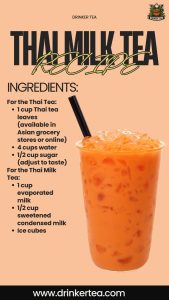
Ingredients Needed to Make Thai Tea at Home
To prepare classic Thai tea, you only need a few basic ingredients. Most of these are easy to find and affordable.
-
Strong black tea or Thai tea mix
-
Water
-
Sugar (white or brown)
-
Condensed milk, evaporated milk, or whole milk
-
Ice cubes (for iced Thai tea)
Optional ingredients for extra flavor include star anise, cardamom, or vanilla extract. These additions help create a more authentic Thai tea aroma and taste.
Step-by-Step Guide to Making Thai Tea
Step 1: Brew the Tea Strong
Strong tea is the foundation of good Thai tea. Because milk and ice will be added later, the tea must be more concentrated than regular tea.
Begin by boiling water in a kettle or pot. Add black tea leaves or Thai tea mix to the hot water. Use more tea than usual to achieve a bold flavor. Let the tea steep for about five to ten minutes, depending on how strong you prefer it.
Once steeped, strain the tea through a fine strainer or cloth filter. The resulting liquid should be dark, aromatic, and highly concentrated.

Step 2: Sweeten the Tea While Hot
While the tea is still hot, add sugar and stir well until it fully dissolves. Sweetening the tea at this stage is important because sugar blends more easily in warm liquid.
Thai tea is traditionally quite sweet, so do not hesitate to add enough sugar. You can adjust the sweetness later based on your preference. Some people prefer using condensed milk at this stage for added richness and flavor.
Step 3: Cool the Tea
Allow the sweetened tea to cool to room temperature. Cooling prevents the ice from melting too quickly and watering down the drink. To speed up this process, place the tea in the refrigerator for about 30 minutes.
Once cooled, your tea base is ready to be turned into iced Thai tea.
Step 4: Add Ice and Milk
Fill a tall glass with ice cubes. Pour the cooled tea over the ice, leaving some space at the top. Slowly add condensed milk, evaporated milk, or whole milk.
As the milk mixes with the tea, it creates the signature creamy texture and layered appearance that Thai tea is known for. You can gently stir the drink for an even blend or leave it slightly layered for visual appeal.

Choosing the Right Milk for Thai Tea
Milk plays a major role in the flavor and texture of Thai tea. Different types of milk create different results:
-
Condensed milk adds sweetness and richness, making the drink dessert-like
-
Evaporated milk provides creaminess without excessive sweetness
-
Whole milk creates a smoother, lighter finish
-
A combination of condensed and evaporated milk offers a balanced taste
For a dairy-free option, coconut milk or oat milk works well and pairs beautifully with the tea’s bold flavor.
How to Make Hot Thai Tea
Although iced Thai tea is the most popular version, hot Thai tea is equally delicious. The brewing process remains the same, but the tea is not cooled or served with ice.
After brewing and sweetening the tea, add warm milk directly into the hot tea. Hot Thai tea is comforting and flavorful, making it perfect for cooler weather or relaxing evenings.

Tips for Authentic Thai Tea Flavor
To get as close as possible to traditional Thai tea, consider the following tips:
-
Use a Thai tea mix that includes classic spices and coloring
-
Brew the tea extra strong to prevent dilution from milk
-
Do not be shy with sweetness, as Thai tea is meant to be sweet
-
Serve in a tall glass to allow room for ice and milk
-
Add star anise or a small amount of vanilla extract for extra aroma
Experimenting with these elements allows you to customize the drink while maintaining its authentic character.